Micro-Commons and Third Space Culture in Taiwan
Observing intergenerational, future-proof spaces in Taiwan that are community and health centric.

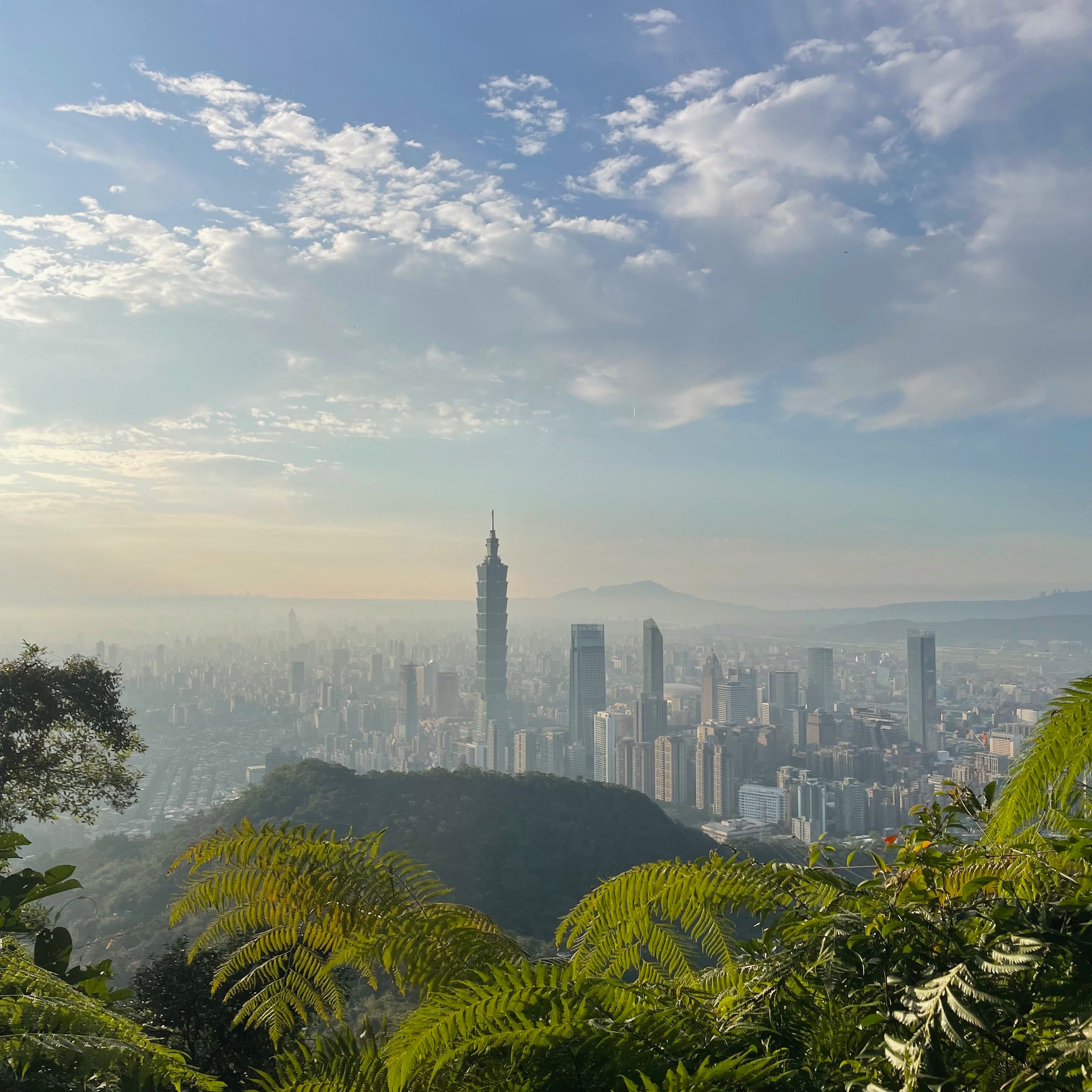
One thing that has really stood out to me about Taiwanese culture are the unique third spaces that are woven into parks, rivers, and mountains.
For example, on 象山 (Xiangshan), nestled along side trails and main trails, which themselves are beautiful and fun to explore, are a variety of intriguing common areas. Some are small with a bench and a view, others are larger with a canopy and a table (perhaps for playing cards, drinking tea, or simply talking about life). But some are much more than casual rest areas. They are entire gathering spaces fixed with fully covered community areas with picnic tables, exercise and stretching equipment (always DIY), and, in some instances, full-on badminton courts with nets and lines.
One day, while hiking, I could hear the classic thwap-thwap-thwap of a shuttle being smacked back and forth, followed by the gleeful shouting of a well-earned point.
I almost couldn't believe my eyes. Ahead of me was group of adults, some easily in their 50s, 60s or beyond, playing a fast-pace game of badminton, moving nimbly and youthfully. Smiling, laughing, and cheering. Beside them was a group of more than twenty people of all ages gathered around multiple tables enjoying a shared meal. Others were scattered among the exercise equipment. One person was laying with their back against a fixed upright tire, holding two metal poles on either side, using the round contour and the force of their arms to arch their back and hold a very deep stretch. Another was hanging from a chin-up bar, made of scrap metal poles, while others were stretching against a variety of multi-purpose structures.
I didn't see anyone using it at the time, but there was also a bench press with a barbell and rack, along with some well-arranged dumbbells nearby.
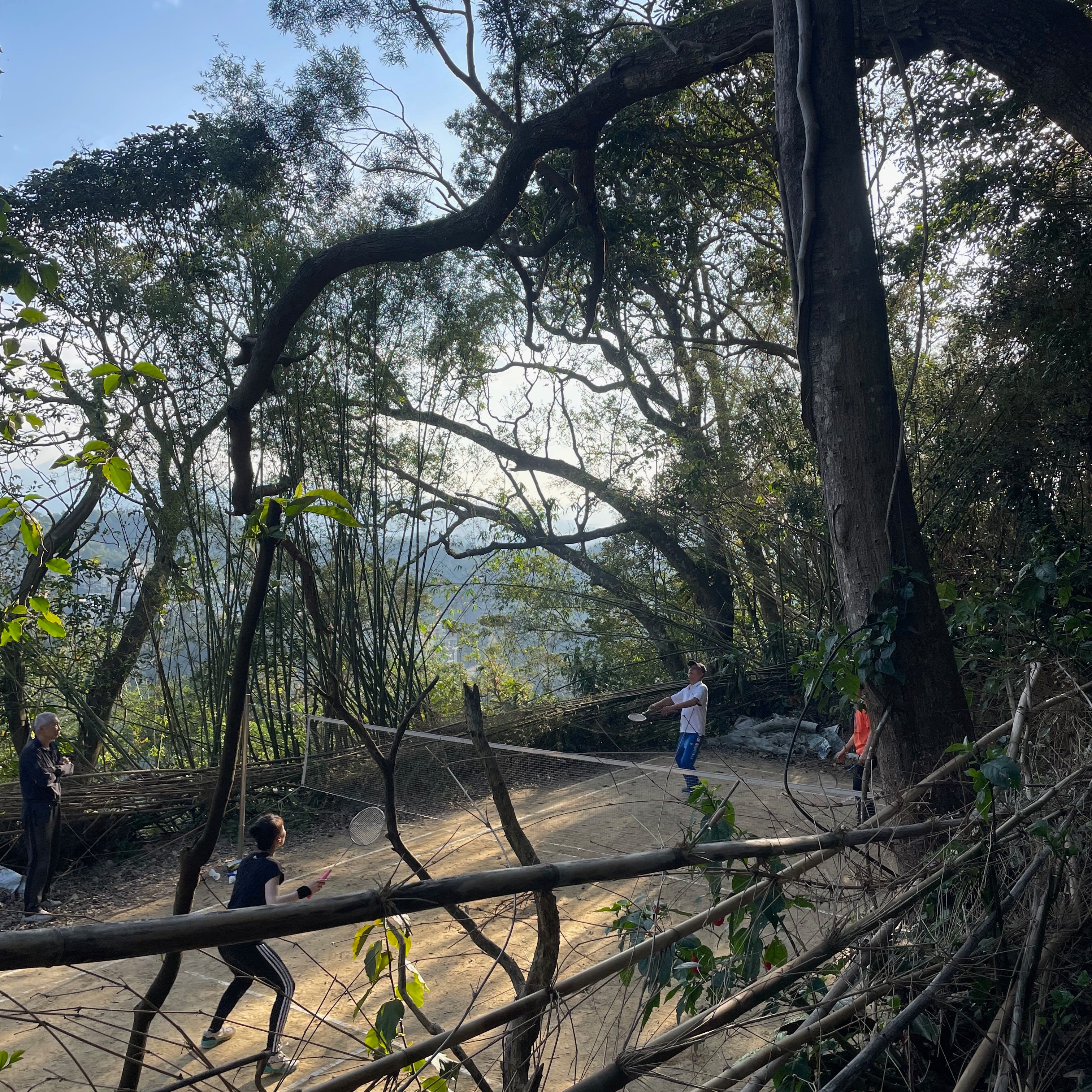
Wow, was all I could think. This place is cool as f***. I was genuinely lost for words.
Seriously, what kind of place is this?
Who maintains it?
What purpose does it serve?
Think about these questions for a moment.
This “third” space is not a business or an organization. Nor is it a backyard or private property. Not even a public park maintained by a municipal government. It is "simply" a shared space maintained by people who use it, embedded in a trusting culture with a strong social contract (no one seems to worry that the equipment will be vandalized or stolen) — a micro-commons, if I may. I put "simply" in quotations because it's simple in it's arrangement, yet profound in it's impact.
Because this space is not managed by a business that has a competitive imperative to gain market share, or a political body with a mandate to serve constituents, it doesn't need to uphold a performative image of being well-manicured. Instead, it’s unabashedly raw and functional. The materials and equipment are dirt cheap (repurposed, makeshift, or even literally made of dirt).
This space brings community together, providing elders and youth (those with the most free time in society) a place to gather and connect. It encourages movement and a healthy lifestyle of tending to our bodies by keeping our blood flowing and joints limber.
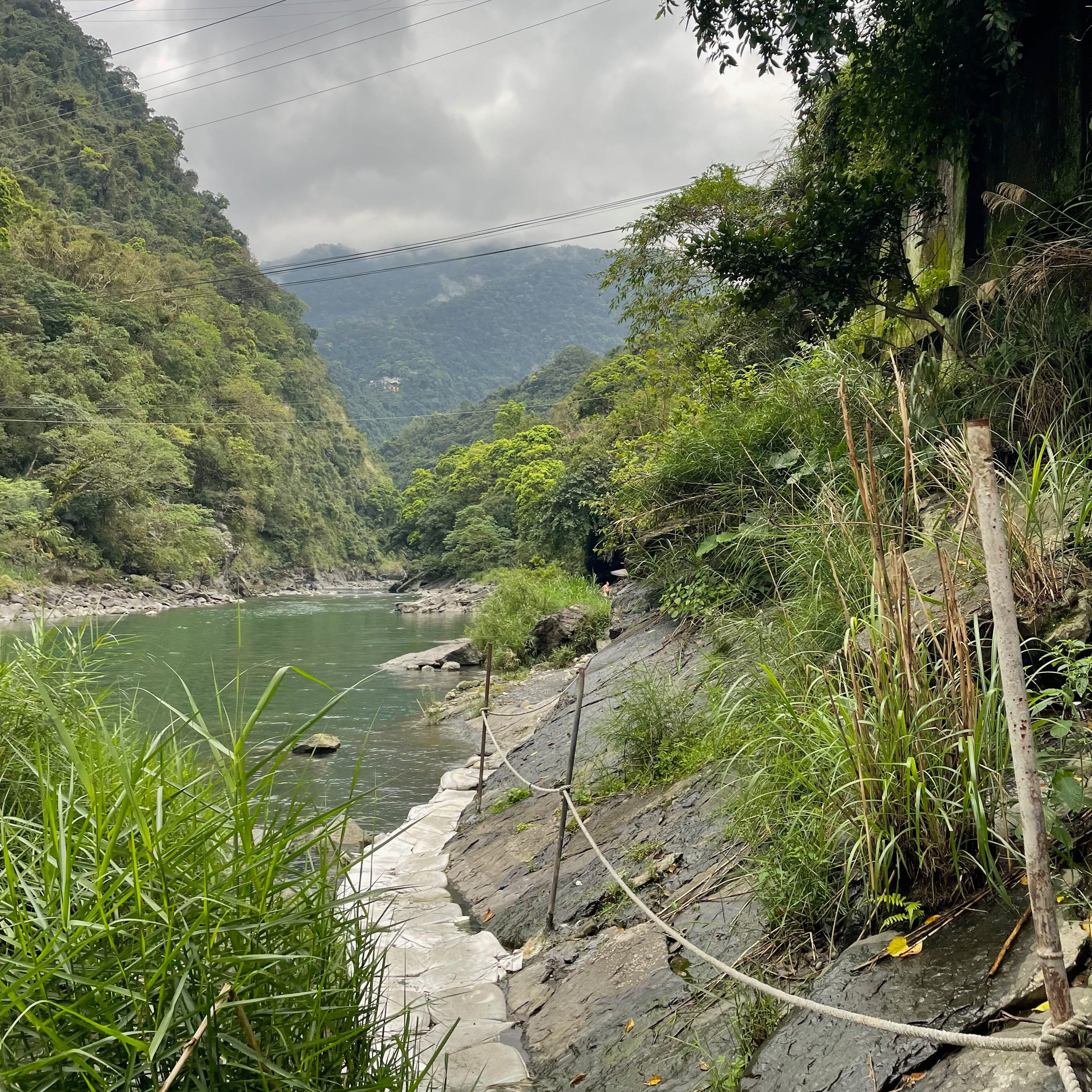
Another example of such a space is Wulai's "unofficial" natural hot spring. After walking along a trail made of sandbags that wiggle between a rocky slope and a river, you are greeted by another micro-commons. Here, you will find common seating, shared equipment (for swimming, bathing, building, eating and exercising), and covered changing areas made of tarps, poles, sticks and ropes.
No one needs a business model, a mission statement, a five-year plan, a podcast, or a political agenda to make any of this stuff. Heck, a guy who was probably in his 60s was talking about how he spent two weeks lugging more than one hundred sandbags across the river to build the hot spring tub I was relaxing in. A tub which will eventually be washed away by a future typhoon.
I can't help but dream about all the other spaces like this, unique to their local bioregions and cultures, around the world. Spaces that are fun, free, intergenerational, and community/health oriented. The kind of spaces that circumvent the pernicious economic and identity paradigms of our generation while simultaneously reminding us of what life is all about.
They are future-proof, capitalism-proof and great simplification-proof.
This is but one example of commons-oriented, grassroots culture and citizenry at work. Let’s keep finding and cultivating the others.
The future is already here. It’s just hidden beside rivers and cliffs.
Another “micro-commons” I experienced while there were the fairy gardens outside people’s homes - within the pots of plants, people would add miniature homes and figurines and construct scenes from them. A one inch tall man fishing from a lake the size of a coin, for example, next to his wooden cottage. Each of these invited passersby to just come and observe, closely, and take in the detail, a practice that couldn’t exist without this larger social contract you talk about.
I’m so glad that the reasons we like Taiwan are so similar. Worth reading Plurality and Made In Taiwan (cookbook) while you’re there for more on how its culture emerged.